Learn the ship as four connected layers. If you only watch the crosshair from the bridge, you miss the interior battle, subsystem state, hangar traffic, and objective transitions that determine whether the ship can keep contributing.
The four layers of a capital ship
Helm and command
Position the hull, read the tactical situation, choose where the ship can apply pressure, and avoid committing it where its interior and hangar cannot be supported.
Fleet positioning and weapons
The ship exists inside a wider fight of lineships, smaller craft, stations, targets, and objective lanes. External damage and target choice change the interior workload.
Defense, repair, and lockouts
Crew and defenders move through playable interiors to respond to boarding pressure, repair systems, protect routes, and act on subsystem or core-lockout objectives.
Sorties and boarding traffic
Fighters, bombers, and boarding transports connect the capital ship to objectives beyond its hull. Launch and return flow is part of the ship's battlefield role.
Capital-ship crew roles
| Role | Primary responsibility | Failure to avoid |
|---|---|---|
| Helm or captain | Position the ship, read objectives, select pressure points, and preserve routes for support and withdrawal. | Flying as if the hull were a fighter and ignoring interior or hangar state. |
| Weapons support | Apply fire to targets that serve the current fleet objective and respond to changing subsystem states. | Continuing to attack a disabled or irrelevant target while another threat determines the battle. |
| Interior defense and repair | Protect movement routes, answer boarding alarms, repair systems, and prevent lockout or destruction objectives. | Treating interior defense as separate from the external fleet fight. |
| Embarked strike craft | Launch fighters, bombers, or boarding actions that extend the ship's reach and return when the wider objective requires it. | Leaving the hangar without a target, return plan, or understanding of the capital ship's current need. |
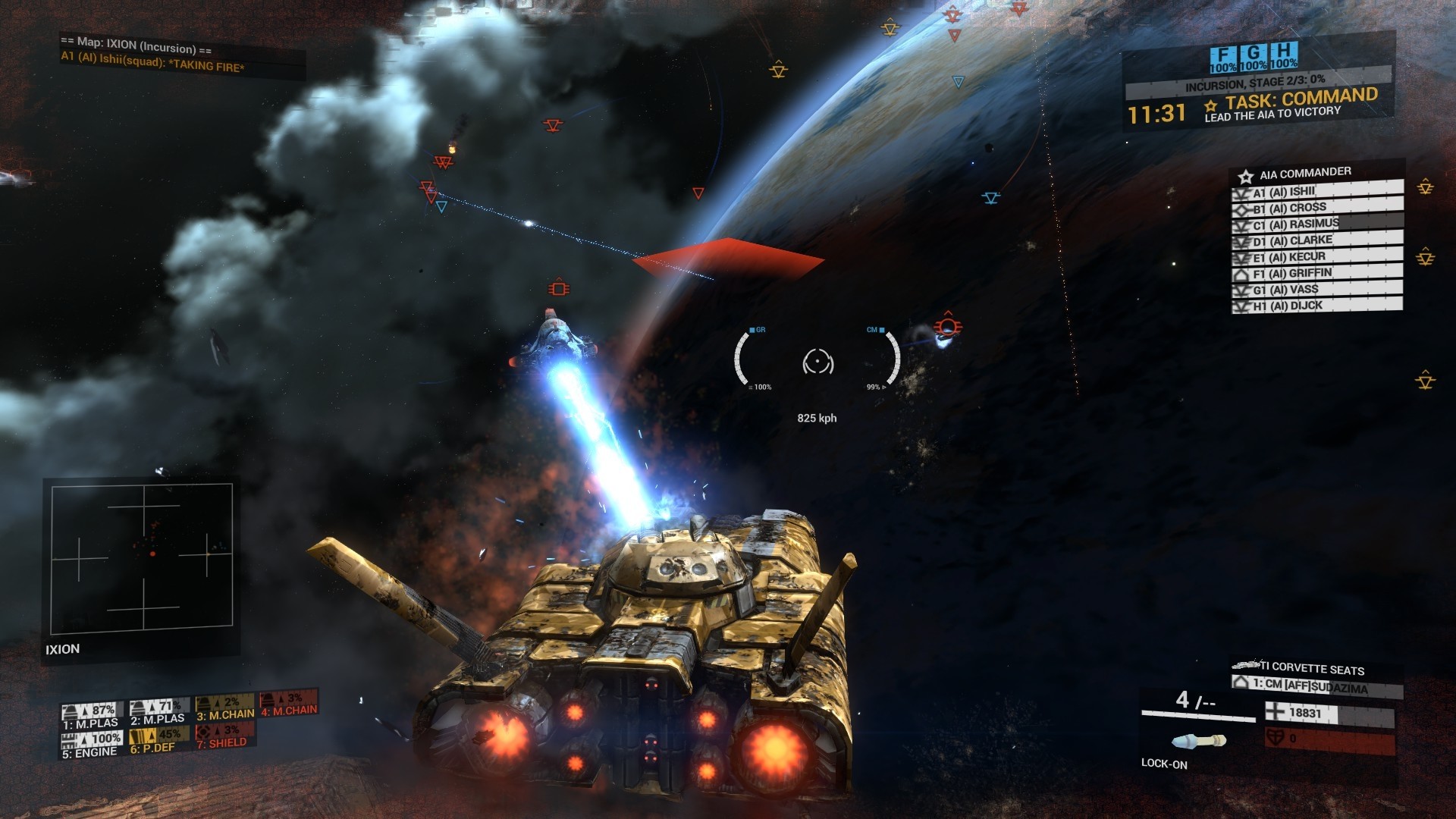
How subsystem state changes the battle
The official ship tutorial covers subsystem repair, subsystem destruction, and core lockouts. Update 30 also added audio cues when capital-ship subsystems are disabled, clearer HUD status messages, and targeting changes intended to reduce wasted lock-ons against already disabled systems.
| Signal | What it tells the crew | Useful response |
|---|---|---|
| Subsystem disabled cue | A ship function has changed state and may no longer contribute normally. | Reassess target priority, repair need, and whether the ship should remain committed. |
| Boarding alarm | An enemy boarding action has attached or entered far enough to trigger a warning. | Coordinate interior defense without abandoning the external objective blindly. |
| Core lockout objective | The scenario or tutorial recognizes a high-value internal system state. | Follow current markers and prompts; do not rely on historical map assumptions. |
| HUD status update | The current build is communicating a subsystem or target-state change. | Use the live message as the source of truth for the next decision. |
Before taking command
- Complete the ship tutorial through flight, targeting, repair, boarding, and lockouts.
- Observe one bot fleet battle and identify which objective the capital ships are serving.
- Learn where the bridge, hangar, and major interior routes connect in the current scenario.
- Watch subsystem and boarding messages instead of reading only the external target reticle.
- Know when to give the role back if the ship needs a response you cannot yet coordinate.
Fighter sortie thinking versus capital-ship thinking
| Decision | Fighter or bomber | Capital ship |
|---|---|---|
| Movement | Choose an attack and return route for one sortie. | Choose a position that supports weapons, interior response, hangar traffic, and the objective. |
| Damage | Decide whether to continue, disengage, or return. | Translate subsystem and interior state into a fleet-level commitment decision. |
| Crew | Usually focus on the current pilot or small craft role. | Account for players and bots operating weapons, interiors, repairs, defense, and embarked craft. |
| Loss | Affects one sortie and local pressure. | Can reshape routes, spawns, objectives, hangar access, and boarding opportunities. |
Why this is not a complete ship database
Current official sources establish that capital ships are pilotable, have playable interiors, and connect to fleet, hangar, boarding, and subsystem play. They do not expose a complete version-stamped 1.0 roster with verified names, classes, weapons, defenses, interior layouts, or statistics. Those details remain deferred rather than being copied from older guides or a newly created competitor.
A practical learning route
- Ship tutorial. Learn flight, targeting, repair, boarding, subsystem destruction, and core lockouts.
- Damage-free practice. Rehearse movement and target reading without live-match pressure.
- Bot observation. Follow a fleet battle before occupying its central role.
- One responsibility. Start with helm, interior response, or an embarked sortie rather than trying to control every layer.
- Review the transition. Ask when the battle moved from external pressure to an interior or hangar problem.
Angels Fall First capital ships FAQ
Can you pilot capital ships in Angels Fall First?
Yes. The official Steam description confirms fully operational and pilotable capital ships with playable interiors.
What can players do inside a capital ship?
Official sources support interior movement, boarding defense, subsystem repair and destruction, core lockouts, bridge activity, and launching fighters, bombers, or boarding actions from hangars where the scenario allows it.
How many capital ships are in Angels Fall First?
This page does not publish a complete current roster or ship count. The available official current sources confirm the system but do not provide a version-stamped 1.0 hull list.
Where should a new player learn capital ships?
Start with the official ship tutorial and damage-free practice spaces, then observe one bot fleet battle before taking a central command role.